
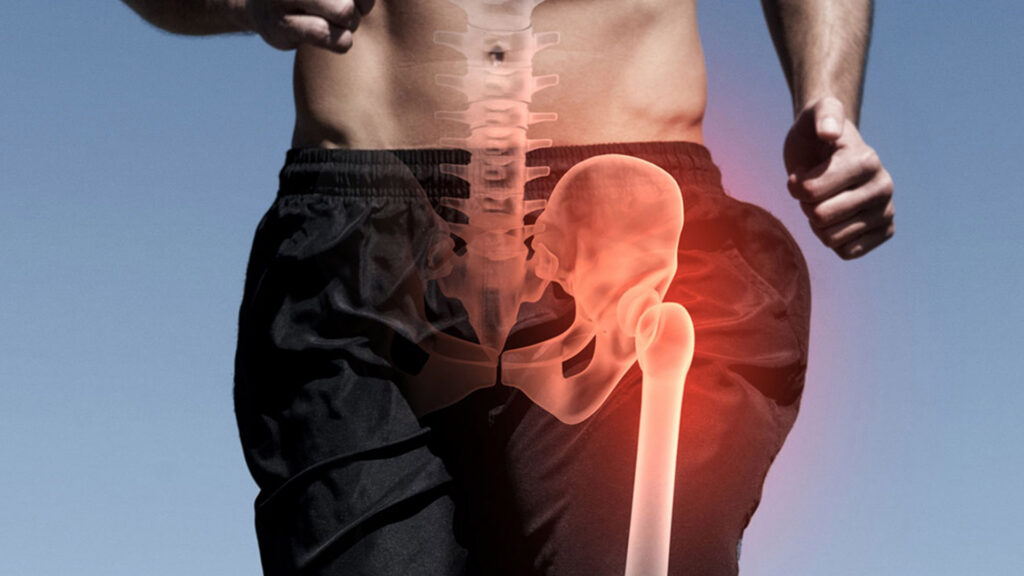
Hip pain can be frustrating for active adults, particularly when it begins to interfere with running, exercise, sports, or everyday movement.
Pain in the hip or groin is sometimes attributed to a muscle strain, but persistent symptoms can arise from several different structures or conditions involving the hip.
What Does a Hip Labral Tear Feel Like?
The labrum is a ring of fibrocartilage around the socket of the hip joint that contributes to joint stability and function.
Symptoms that may occur with a labral injury include:
- Pain in the hip or groin
- Clicking, catching, or locking sensations
- Stiffness
- Pain with certain hip positions or movements
- Discomfort during or after exercise
- Reduced range of motion
These symptoms can also occur with other hip conditions, so symptoms alone cannot determine whether a labral tear is present.
Can Hip Pain Be Caused by Exercise?
Physical activity, including running, repetitive training, and sports, can contribute to or aggravate hip symptoms.
In some cases, activity may bring attention to an underlying structural or mechanical condition rather than being the sole cause of the pain.
Persistent or recurring pain, particularly pain that returns when activity resumes, may warrant further evaluation.
What Is Hip Impingement?
Femoroacetabular impingement, often called FAI or hip impingement, involves abnormal contact between the femur and the acetabulum during certain hip movements due to the shape of the hip bones.
In some patients, FAI may be associated with pain, reduced range of motion, or injury to structures such as the labrum or cartilage.
Importantly, some people may have imaging findings associated with FAI without experiencing symptoms. Diagnosis and treatment decisions therefore require consideration of symptoms, physical examination findings, imaging, and individual circumstances.
How Is a Hip Labral Tear Diagnosed?
Evaluation generally begins with a detailed medical history and physical examination.
Depending on the symptoms and examination findings, imaging such as X-rays or MRI may be recommended. Imaging findings should be interpreted together with a patient’s symptoms and physical examination rather than in isolation.
Do Hip Labral Tears Require Surgery?
No. The presence of a labral tear does not automatically mean surgery is necessary.
Treatment may include activity modification, physical therapy, medications, or other nonsurgical approaches, depending on the individual patient and condition.
Surgery may be considered in certain patients when symptoms persist despite appropriate nonsurgical treatment or when the underlying condition, clinical findings, and the patient’s goals make surgical treatment appropriate.
What Is Hip Arthroscopy?
Hip arthroscopy is a minimally invasive surgical technique that allows an orthopedic surgeon to view and treat certain conditions within and around the hip joint through small incisions using a camera and specialized instruments.
Depending on the patient’s condition, arthroscopy may be used to address certain labral, cartilage, impingement-related, or other hip conditions.
Whether hip arthroscopy is appropriate depends on the diagnosis, anatomy, symptoms, examination findings, imaging, and individual goals.
When Should Hip Pain Be Evaluated?
An orthopedic sports medicine evaluation may be appropriate when hip or groin pain persists, repeatedly returns with activity, limits mobility or exercise, follows an injury, or is accompanied by symptoms such as clicking, catching, locking, or reduced range of motion.
Take the Next Step
If persistent hip pain is interfering with your activities, an individualized orthopedic evaluation can help identify potential causes and determine appropriate treatment options.
Schedule an Appointment with Dr. Michael Campbell
Medical Disclaimer
The information provided in this article is for general educational and informational purposes only and is not intended or implied to be a substitute for professional medical advice, diagnosis, or treatment. Individual conditions, treatment options, risks, benefits, and outcomes vary. Always seek the advice of a qualified healthcare professional regarding any questions you may have about a medical condition, symptoms, or treatment. Do not disregard or delay seeking professional medical advice because of information you have read on this website.
This content is not intended to establish a physician-patient relationship with Michael P. Campbell, MD, his practice, or any affiliated healthcare organization. Treatment recommendations can only be made following an appropriate evaluation by a qualified healthcare professional.
If you are experiencing a medical emergency, call 911 or seek immediate medical attention.